Trauma, Rumination and Reality
Public exposure of sexual abuse scandals and conversations around power, collusion, and silence can stir something deep in all of us. For some, this is political outrage. For others, it is personal memory. And for others, it reactivates trauma we thought we had left behind — pulling us into moments where the mind feels frozen, replaying situations we could not change.
When old trauma resurfaces, the mind can loop endlessly around particular moments. Details sharpen. The body tightens. Arguments restart internally. It can feel as though the events are happening now rather than belonging to the past — a loop in which the self remains trapped in the impossible, trying to resolve what once had no solution.
These loops are not random. They are structured around limitation.
Limitation is not weakness. It is not passivity. It is not resignation. Limitation is the recognition of reality — the boundary between what could have been influenced and what could not.
Children, by definition, are limited. They are dependent. Their safety, housing, food, and emotional survival are controlled by adults. Their cognitive and psychological development is still forming. A child cannot simply extract themselves from dangerous or demeaning environments, particularly when those environments are within the home itself. The range of possible action is structurally constrained.
In trauma, limitation is profound. There were moments when our capacity to influence events was severely restricted. Safety depended on forces outside our control. The imbalance of power was real. The child was not deficient; the environment was overwhelming.
Yet adulthood brings perspective. With greater cognitive capacity, language, and autonomy, we look back and imagine alternatives. The adult mind can see options that were not psychologically or practically available at the time. This retrospective awareness can create the illusion that something different could have been done.
When the psyche cannot fully accept the limitation that existed then, it keeps searching. It replays the scene, scanning for the missed move — the sentence that should have been spoken, the strategy that might have prevented harm. Rumination is often an unconscious refusal of limitation.
Acknowledging limitations does not end movement. It redirects it. It shifts us from searching for retroactive control to cultivating present agency. It is the recognition that the past cannot be altered — but the future remains open.
Recognising limitation does not excuse cruelty, nor does it minimise harm. It restores proportion. It returns responsibility to where it belongs. And it allows the adult self to stand where the child could not.
Not every crisis is trauma. Loss of a job, money, status, or even relationships can be deeply painful and destabilising. But trauma involves an overwhelming threat or violation where the capacity to act collapses or becomes severely constrained. It is precisely this collapse — this enforced limitation — that imprints itself so deeply into the nervous system and psyche.
When limitation is not acknowledged, rumination becomes a kind of psychic protest. The mind attempts to “fix” the unfixable. Collective events — new scandals, new injustices — can reactivate this search, pulling us back into circuits of helplessness and moral urgency.
Conscious choice is what begins to thaw the frozen state. Not because it erases the past, but because it accepts limitation and shifts the question from “What should I have done?” to “What can I do now?”
Reflection, writing, therapy, advocacy — these become acts of present agency rather than repetitions of past helplessness. Small, deliberate choices interrupt the loop. They do not deny history; they relocate it.
Astrology offers another symbolic lens for this process. Saturn in Aries reflects disciplined self-definition — the task of defining oneself through boundaries rather than past injury. Uranus moving into Gemini symbolises liberation from rigid mental loops, sudden insight that interrupts repetition. Whether taken literally or symbolically, these archetypes mirror the internal movement from entrapment to awareness.
Through years of self-analysis and trauma-focused psychotherapy, I’ve learned that the nervous system does not need to be hijacked by every trigger. Patterns can be recognised. Limitations can be acknowledged. Choice can be exercised — not in the past, but in the present.
Understanding limitations does not mean the work is finished. Integration can take years. Triggers soften gradually. Consciousness does not erase history; it changes our relationship to it. We are not required to be fully healed to live meaningfully. We are required only to become more aware of where we stand.
Even collective material, such as the recent release of information relating to Epstein, many of us are triggered by anger, helplessness, and moral outrage. These reactions are understandable. But acknowledging limitation — what we could not change then, and what we cannot control now — allows us to respond without being consumed.
Frozen in Impossible Situation / Childhood Constraint: Moments where trauma occurred; the child’s range of action was structurally limited. Safety, autonomy, and understanding were constrained by environment and power imbalances.
Limitation Recognised: Acknowledging what could not have been changed or controlled. This is not resignation, but the turning point that allows forward movement.
Conscious Choice / Agency: The adult self stepping in, making intentional decisions, and redirecting energy away from rumination.
Present Self / Integration: Living in the present, acting with awareness, creativity, and conscious engagement with life.
Astrological Overlays (optional): Saturn symbolises boundaries, structure, and self-discipline; Uranus symbolises insight, liberation, and mental freedom. These are symbolic lenses for understanding the loop’s dynamics.
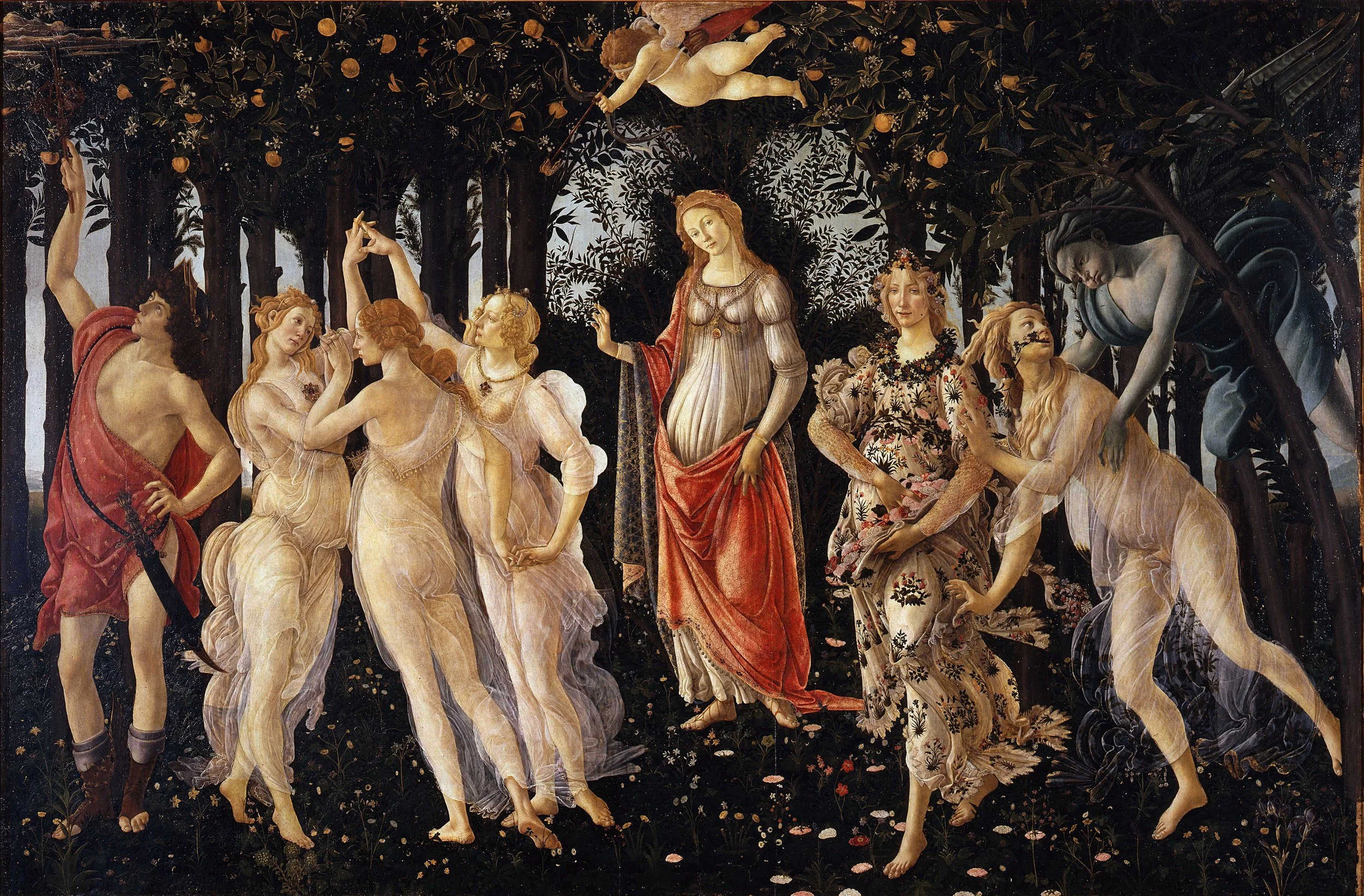
Sandro Botticelli, Primavera, c. 1482, Uffizi Gallery, Florence
Botticelli’s Primavera captures the interplay of constraint, growth, and transformation. Like the figures in the painting, we move through cycles — from moments of frozen limitation to awareness, conscious choice, and the emergence of the present self. The central figure of Venus embodies recognition and presence, guiding us toward integration, while the Graces suggest the potential for beauty and agency even after constraint. The flowing composition mirrors the loops of memory and rumination, reminding us that forward movement is possible, even when the past feels inescapable. The past shapes us. It does not have to govern us. The future remains open.
If you need help with the ideas above on limitations, see my webpage: