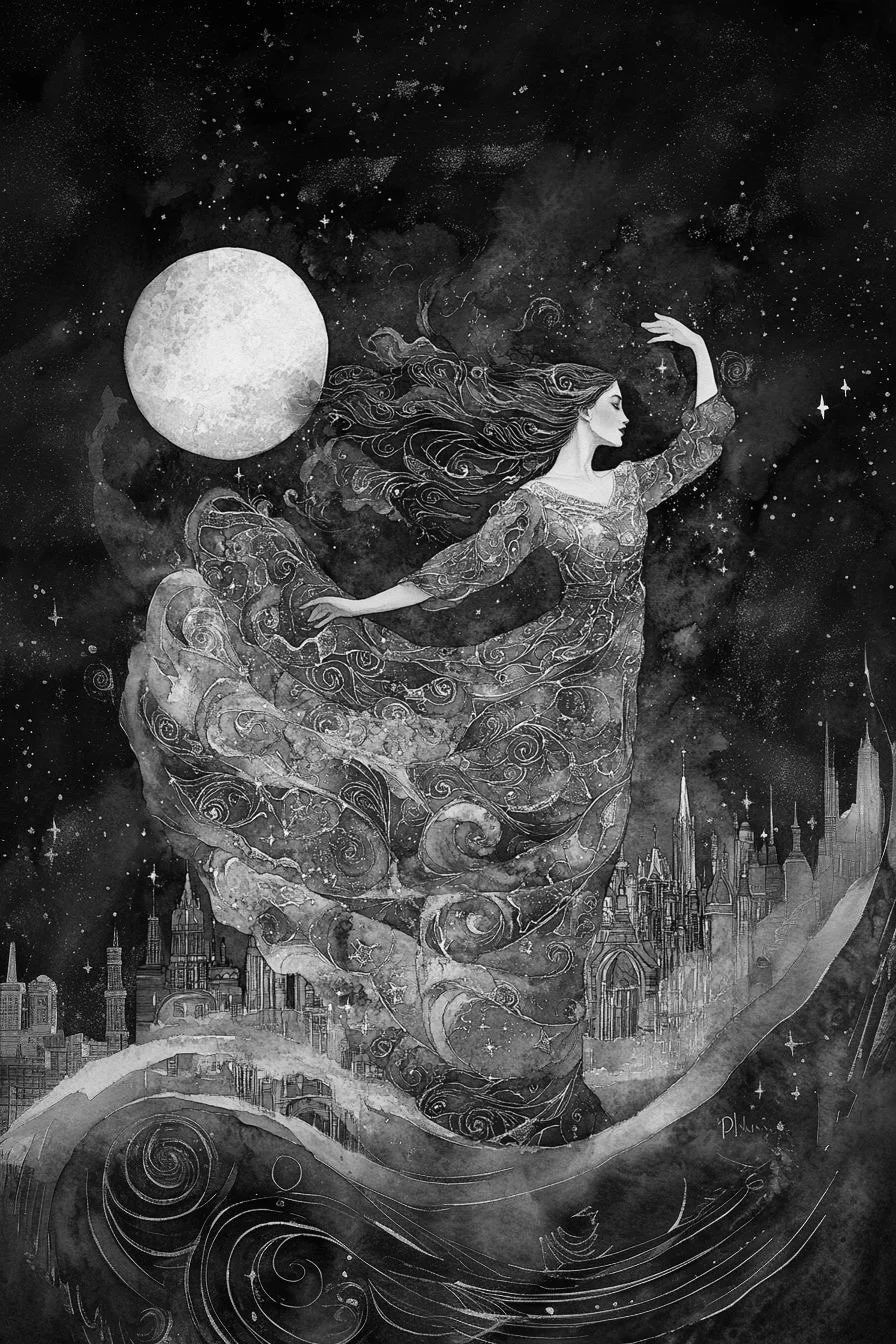
Choices & Limitations
Understanding Choice & Our Own Limitations
I’m exploring the ideas of choice and limitation in trauma, inspired by a passage in The Inner World of Trauma by Donald Kalsched.
I’m looking at how Isaac Bashevis Singer’s reflection on choice can be misleading if read on its own, and why it makes more sense when understood alongside limitation, the recognition of what we could and could not control. Only when the limitation is acknowledged can genuine choice emerge without invalidating the reality of trauma.
If you’ve experienced trauma, I live with complex PTSD myself, so I’m writing from lived experience as well as from what I’ve been reading.
I was thinking about the discussion around the part Kalsched added on Singer. On its own, it’s out of context in what Kalsched is explaining overall.
This part of the book is what he placed on Singer:
The connection between a failure to choose and the takeover of psychic life by daimons is given beautiful expression in some remarks made by author Isaac Beshevis Singer in an interview for Parabola Magazine.
Singer remarks:
I would say that behind all my ideas… is the freedom of choice. I feel that the freedom of choice is the very essence of life. We have one great gift from God and this is to choose. And we always indulge in choosing. If we pay attention to one thing, we have chosen to pay attention to it. If we love somebody, we have chosen this person for love. This is in every act of humanity. To me, God is freedom. And nature, to me, is necessity…. When people leave free choice, the demons appear. The demons are in a way the dark side of nature which we choose. If we stop completely believing in our power [of choice], then other powers can come upon us. In other words, the demon to me is a negative side of free choice. Demons come when people resign themselves… when people say to themselves, “I’m not going to make any choices anymore. I will just let the powers work for themselves.” It is then that the demon is bound to appear. The danger is always there - like a medical doctor who will tell you that the microbes are always there in your mouth and in your stomach, and if you become weak, they begin to multiply and become very strong…. Just as we are medically surrounded by dangerous microbes, so our spirit has always to fight melancholy and disbelief and viciousness and cruelty and all kinds of things.
At this point the interviewer asks, “Why melancholy?” and Singer replies: Oh, but the very essence of demons is melancholy. Because it’s the very opposite of hope…. I have sympathy for everyone who suffers and lives. Because we are all living in a great, great struggle, whether we realize it or not. Sometimes we realize it. This is a very difficult thing - we very often say how difficult life is…. We have to go through this kind of struggle. In a way, the hope is that life does not last forever, the crisis does not last forever, and behind all this crisis, behind all this darkness, there is a great light. We have to struggle, but we are not lost, because the powers which have created us are actually great and benign powers. (Singer, 1981: 73)
Donald Kalsched, The Inner World of Trauma, page 205
Let’s talk about what is really being said here, because Singer (as quoted by Donald Kalsched in The Inner World of Trauma) is using symbolic language rather than literal demons. He’s describing a psychological process.
1. “Freedom of choice” as psychic vitality
Singer’s core idea is simple but profound:
Psychic life stays alive when we experience ourselves as able to choose.
Choice here doesn’t mean grand decisions — it means participation in one’s own life:
• choosing where attention goes
• choosing relationships
• choosing meaning
• choosing response rather than resignation
In Jungian terms, this is ego consciousness staying engaged with life instead of collapsing into passivity.
When choice is alive, the psyche feels agentic, creative, hopeful.
2. What the “daimons” or “demons” symbolise
Singer is not talking about supernatural beings. He’s describing what depth psychology calls autonomous complexes — parts of the psyche that take over when conscious agency weakens.
In modern psychological language, these “demons” can look like:
• intrusive moods
• compulsive thoughts
• despair or melancholy
• trauma loops
• inner critics
• emotional overwhelm that feels foreign or controlling
Kalsched’s trauma theory suggests that when overwhelming experiences occur, parts of the psyche split off to protect the person. Those protective systems later feel alien — almost like inner figures acting independently.
So the “demon” = psychic energy operating without conscious choice.
3. Why melancholy is central
Singer’s answer about melancholy is psychologically precise:
Melancholy is the opposite of hope.
Melancholy here isn’t ordinary sadness. It’s closer to:
• resignation
• loss of agency
• “nothing I do matters”
• psychic freezing
When choice disappears, hope disappears — and when hope disappears, the psyche becomes governed by necessity rather than freedom.
Notice how he contrasts:
Freedom — Necessity
God (symbolically) — Nature
Choice — Compulsion
Participation — Resignation
Hope — Melancholy
He’s describing an inner struggle between aliveness and psychic determinism.
4. The microbiome metaphor
Microbes are always present; illness comes when resistance weakens.
Singer suggests destructive psychic tendencies are always potential, not abnormal.
Meaning:
• darkness is part of being human
• vulnerability is universal
• what matters is inner resilience and engagement
This aligns strongly with Jung’s idea that shadow material is always present — the task is relationship with it, not eradication.
5. Why this passage resonates with trauma work
Kalsched uses Singer because trauma often involves exactly this experience:
After overwhelming events:
• choice feels removed
• life feels imposed rather than lived
• inner protective systems become dominant
• melancholy appears as a psychic shutdown
Healing, then, is not “fixing” the person — it is restoring the capacity to choose again, even in small ways.
Which is interesting, because I have been experiencing recently:
• taking action instead of worrying
• choosing to change sugar habits
• deciding boundaries with people
• reclaiming my artwork
• structuring my writing
Those are all micro-acts of psychic choice.
6. Why people respond strongly to this idea
The language of “demons” works because it captures a real subjective experience:
Sometimes moods or thoughts feel like:
• they arrive
• they take over
• they are not fully “me”
Depth psychology gives symbolic language to that without pathologising it.
7. The hopeful ending
Singer ends with something essential:
The struggle exists, but we are not lost.
The psyche contains both:
• forces of collapse
• forces of healing
And the struggle itself is evidence of life — not failure.
Then, coming to the important part of the idea of limitation, which Donald Kalsched explains in The Inner World of Trauma:
Choice alone doesn’t tell the full story. Sometimes, what keeps the mind stuck isn’t a lack of decision, but the reality that there were things we simply could not control at the time. Limitation is about acknowledging those boundaries — the things we could not change, prevent, or fix.
Reading Singer on choice without understanding the idea of limitation can feel a bit out of context. The book isn’t about refusing to choose; it’s also about how the psyche responds when it couldn’t choose, and how that creates loops that keep us reliving the past. Recognising both gives a fuller picture of what the work really involves.
A limitation is simply the recognition of what you could and could not control.
• When something happens that hurts you, or that you can’t change, limitation is the truth that some things were and are outside your power.
• It’s not about blaming yourself or the other person. It’s about accepting reality as it was.
• Without accepting limitation, the mind can keep going over the event again and again, trying to fix what cannot be fixed. That’s what keeps a trauma loop going.
• Accepting limitation doesn’t mean forgetting or excusing harm. It means acknowledging the boundary between what you could influence and what you couldn’t, and then choosing how to respond now, with your present self.
Simple metaphor:
If a vase falls off a table and breaks, limitation is recognising that you cannot undo the breaking. You can clean it up, learn to be careful next time, and even choose to replace it — but you cannot make it un-break. The mind often wants to “un-break” things, and that’s what creates looping. Accepting limitation lets you move on without being stuck.
Many of us have experienced situations — trauma, life crises, war, childhood abuse, or events of violation — where we literally had no ability to choose. That’s the reality of limitation.
Kalsched’s book is very deep, but the key point is this: it’s only when we become aware of what was outside our control, and how our psyche reacted, that we can begin to make conscious choices. Awareness doesn’t erase the past, and choosing doesn’t automatically make it easier — it simply allows us to engage with reality from the present, rather than being stuck in loops of helplessness or rumination.
Importantly, this doesn’t stop unpleasant or difficult events from happening in the future. It doesn’t give immunity from life’s challenges. What it does do is give us a framework to respond with clarity and agency rather than being unconsciously hijacked by old patterns.
So, for me, the limitation recognition would be that my mother did not protect me. In that awareness, I can calm down the looping.
I know there will be triggers, I am not cured by flipping a switch… There will be triggers or events that may pull on me or memories that have been processed as I move through life. That is what Singer is also pointing to.
I have encountered this misunderstanding before. After a serious assault in 2024, someone close to me suggested that I had somehow “chosen” the experience through the law of attraction so that I could give a particular response. What became clear to me then — and again now — is how easily ideas about choice can be taken out of psychological context and applied in ways that unintentionally dismiss the reality of trauma.
When people speak about choice without acknowledging limitation, it can slip into a form of magical thinking. Real trauma is not a life lesson selected by the conscious self, nor something a person attracts through belief or intention. In moments of violation, war, abuse, or overwhelming crisis, the nervous system is in survival, not choice. The psyche adapts to endure what cannot be controlled.
This is why limitation matters so much in Kalsched’s work. Awareness begins not by claiming responsibility for what happened, but by recognising what was never ours to choose in the first place. Only from that recognition can genuine choice emerge — not as blame for the past, but as participation in the present.
Conversations about choice can sometimes come from a caring place, a wish for healing or moving forward. But when broader events in the world resurface collective trauma — as current public discussions are doing — memories and emotions can naturally re-activate. That is not regression or refusal to heal; it is the psyche responding to reality as it unfolds.