Rediscovering Imagination, Dreams, and Inner Work: A Conversation with Nick Pearson
I recently had the opportunity to record a podcast with Nick, where we explored profound aspects of awareness, imagination, and integrating all parts of the self. Our conversation was recorded for YouTube and touched on techniques that Nick uses in his work to help people access their inner world and foster self-understanding.
One of the key ideas Nick shared is what he calls the Golden Triangle. This involves cultivating awareness of the heart, silence, and stillness in the spine. By combining these three elements, we can create a space of deep presence, a refuge from the constant chatter of the mind. It is in this stillness that intuition and imagination can flourish.
We also discussed the importance of integrating the shadow, recognising and accepting the less polished, more vulnerable parts of ourselves. Nick emphasises that trying to remove these elements only leads to internal conflict and suffering. Through visualisation exercises, such as imagining a field with different elements representing parts of the self, one can engage directly with inner experiences without overanalysing them verbally.
These techniques are incredibly relevant to my own hypnosis practice. I plan to incorporate Nick’s methods by guiding clients to connect with their inner imagery, exploring both nurturing and vulnerable aspects of themselves. Visualisation exercises will help integrate shadow elements into a cohesive sense of self, and mindfulness of bodily awareness will open pathways to intuitive insight.
The work also reminded me of the broader value of imagination. In our modern world, we often rely solely on thinking and reasoning, which can narrow our perception. By reconnecting with imaginative faculties and observing the images that arise within us, we tap into a deeper level of understanding and healing.
At the end of this experience, I reflected on a dream I had the night before the podcast. In the dream, I was in an office, a space that felt familiar yet entirely new. Around me were other office staff, a woman breastfeeding a baby, and to my left, a woman lying across a desk, completely naked like a figure from a Renaissance painting. After sharing the dream with Nick, he observed that it reflected both nurture and vulnerability. Stepping into the podcast studio, I did feel exposed, as if metaphorically naked, opening myself to the conversation and to sharing my experiences.
Later that day, on my way home, I witnessed a real-life situation at Shepherd’s Bush station. A man was on the platform, almost naked, with a visible wound, shouting in distress. The trains were delayed while officers ensured his safety. The dream and the real-life experience seemed to echo similar themes: exposure, vulnerability, and the need for care and attention to human fragility.
This experience reinforced how imagination and dreams bridge our internal and external worlds. By working with these faculties, both in personal reflection and professional practice, we can cultivate awareness, resilience, and compassion. Nick’s approach reminds us that the path to wholeness is not just intellectual. It is imagistic, intuitive, and profoundly human.
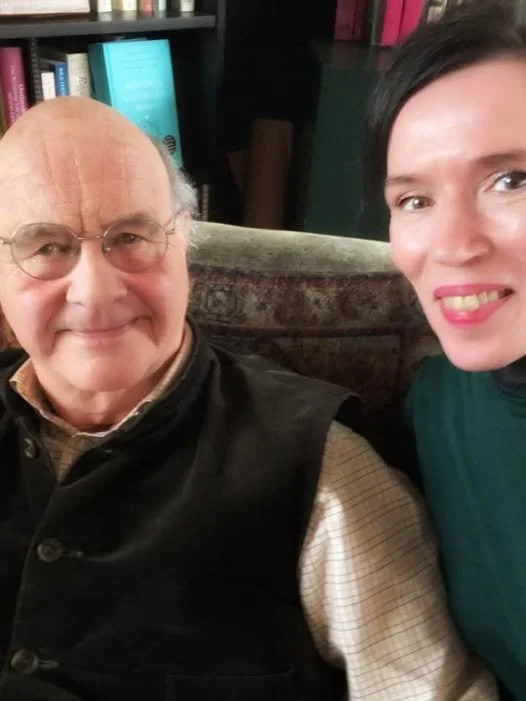
Nick Pearson & Me