Finding Space for Truth: How CSA Survivors Begin to Heal
Understanding & Meaning The Early Coniunctio
Early Coniunctio: Why This Stage Is So Fragile
As someone who has lived through CSA, I understand deeply the knock-on effects of early trauma and how profoundly it shapes the inner world. The psyche forms intricate structures to survive unbearable circumstances, and the journey toward healing is rarely straightforward.
Chapter 10 of The Inner World of Trauma by Donald Kalsched (an essential book for CSA survivors) helped me understand the concept of coniunctio. This term captures a fragile but vital stage in the integration of the traumatised self.
Coniunctio is the ability to know and feel the truth of what happened to you—even painful trauma—without being overwhelmed or losing your adult self in the process.
Think of it like holding two things at once:
The reality of your suffering (your child self, your trauma).
The adult you who is alive now, watching and caring for that child.
It’s a fragile balance: too much focus on the trauma can flood or retraumatize you; too much distance can numb or deny it. Coniunctio is the gentle middle path—bearing the truth without being consumed by it.
If you want to hear how coniunctio is pronounced, you can watch this short 9-minute YouTube video: “The Coniunctio Oppositions and Compliments” with Donald L. Conover, Group Leader of The Carl Jung Depth Psychology Reading Group
Early Coniunctio in Lived Terms
In trauma, the psyche often forms an internal system of extreme protection—what Kalsched describes through mythic folk tales, images like the devouring King, the Lindworm, or the split maternal Self. These figures are not symbolic curiosities; they represent lived psychic structures formed under unbearable conditions.
Early coniunctio often looks like:
Being able to name what happened without immediate dissociation
Short moments of grief or anger followed by exhaustion
Compassion for the child part that quickly becomes overwhelming
A nervous system that needs frequent pauses and withdrawal
This is not regression.
It is not a weakness.
It is a sign that the split is beginning to soften.
But if this stage is rushed—by therapy, by writing, by spiritual ideas, or by internal pressure—the psyche responds with either flooding or shutdown.
The task here is not to go deeper.
The task is to stay alive inside the truth.
A Grounded Definition
If the word coniunctio feels difficult, this sentence captures it in lived terms:
Coniunctio is the capacity to know the truth of what happened without losing the adult self who is living now.
If that sentence feels stabilising rather than activating, then coniunctio is already present.
Writing and Coniunctio (Without Retraumatizing)
Writing can support early coniunctio—but only if it is used with restraint.
Writing that supports coniunctio:
Names experience without reenacting it
Keeps the adult observer present
Stops before emotional flooding
Values pacing over disclosure
Allows meaning to emerge slowly
Writing that retraumatises:
Forces detail
Chases intensity
Collapses time
Removes the witnessing self
At this stage, precision is safer than confession.
Structure is kinder than emotional release.
Why This Matters for CSA Survivors
What Kalsched offers is not a promise of healing, but something more honest: a map of how healing actually begins in a traumatised psyche.
“Coniunctio is not wholeness. It is not a resolution. It is not the end of suffering.”
He is stressing that coniunctio is a very early, fragile stage of integration, not a final state. Think of it like a delicate bridge between the adult self and the wounded child/self. It allows truth and presence to coexist, but it doesn’t magically erase trauma, dissolve the self-care defences, or make life pain-free.
It is the moment when knowing does not equal annihilation.
For those of us whose childhoods were violated rather than protected, this moment is revolutionary. It is the first time truth and presence are allowed to share the same space—briefly, carefully.
That is not nothing.
That is the beginning.
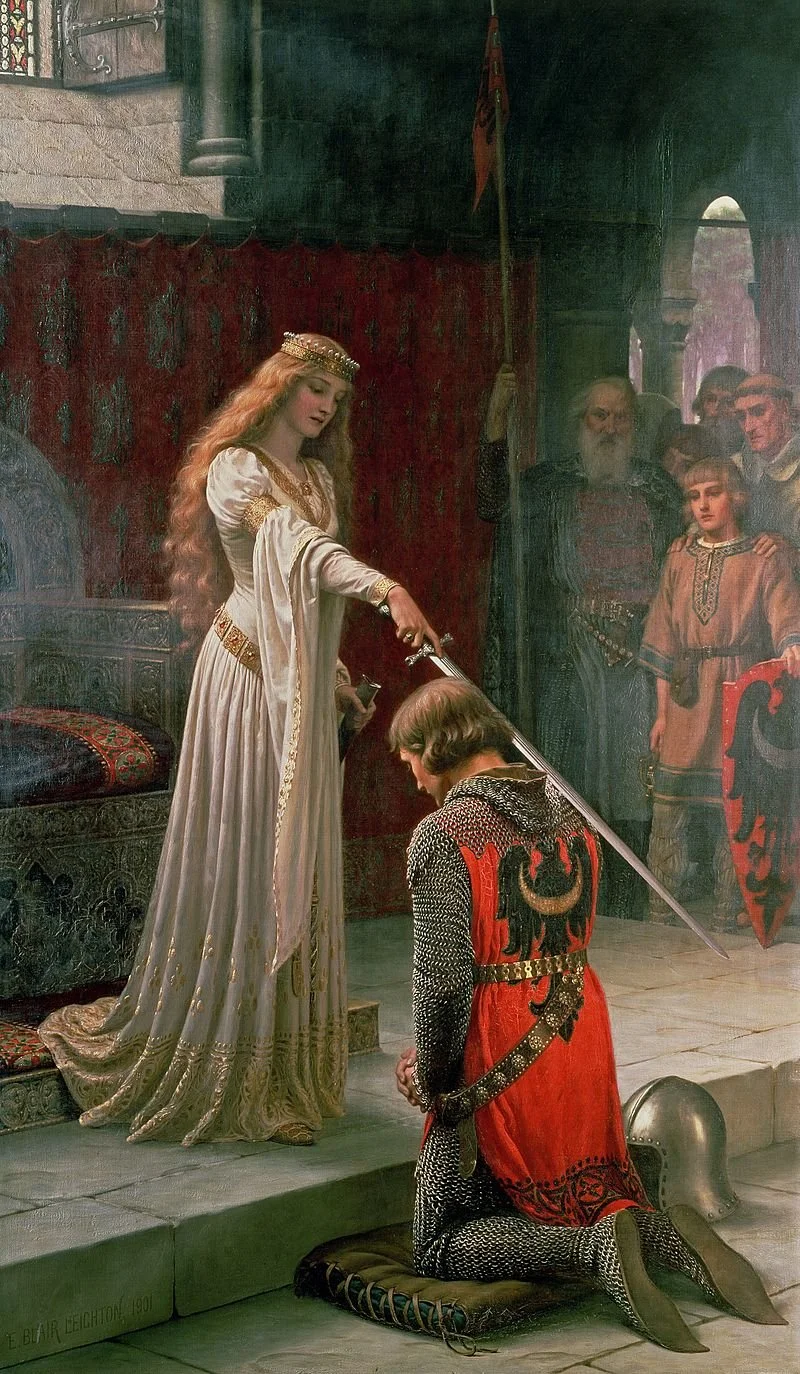
"A fragile moment of truth, witnessed and held."
Painting: Accolade by Edmund Blair Leighton, 1852-1922 - Created 1901
Further Reading: Prince Lindworm (Traditional Fairy Tale)
For readers who want to explore the folktale that underlies the symbolic world in Kalsched’s work — especially the Lindworm, transformation, and the difficult encounter with the shadow side of the Self — this story is foundational.
🔗 Prince Lindworm (full text, traditional fairy tale)
Tip for readers: approach the tale not as “children’s fantasy,” but as a mythic metaphor — seeing the Lindworm, the Queen, and the transformative heroine as representations of internal defences, rage, and the potential for compassion and integration.
You can also find me at www.penleoperyder.com. I provide hypnosis, explore astrology and mentor, and I am trauma-informed.